2026
World History Globe
The history of a country online is usually either an encyclopedia entry you skim or a listicle that tells you nothing. This is the version in between: long enough to explain how a place actually got where it is, and made to be read rather than referenced.
You pick the country off a globe. Each one gets its own page, written end to end and styled entirely from its own flag.
Start on the globe
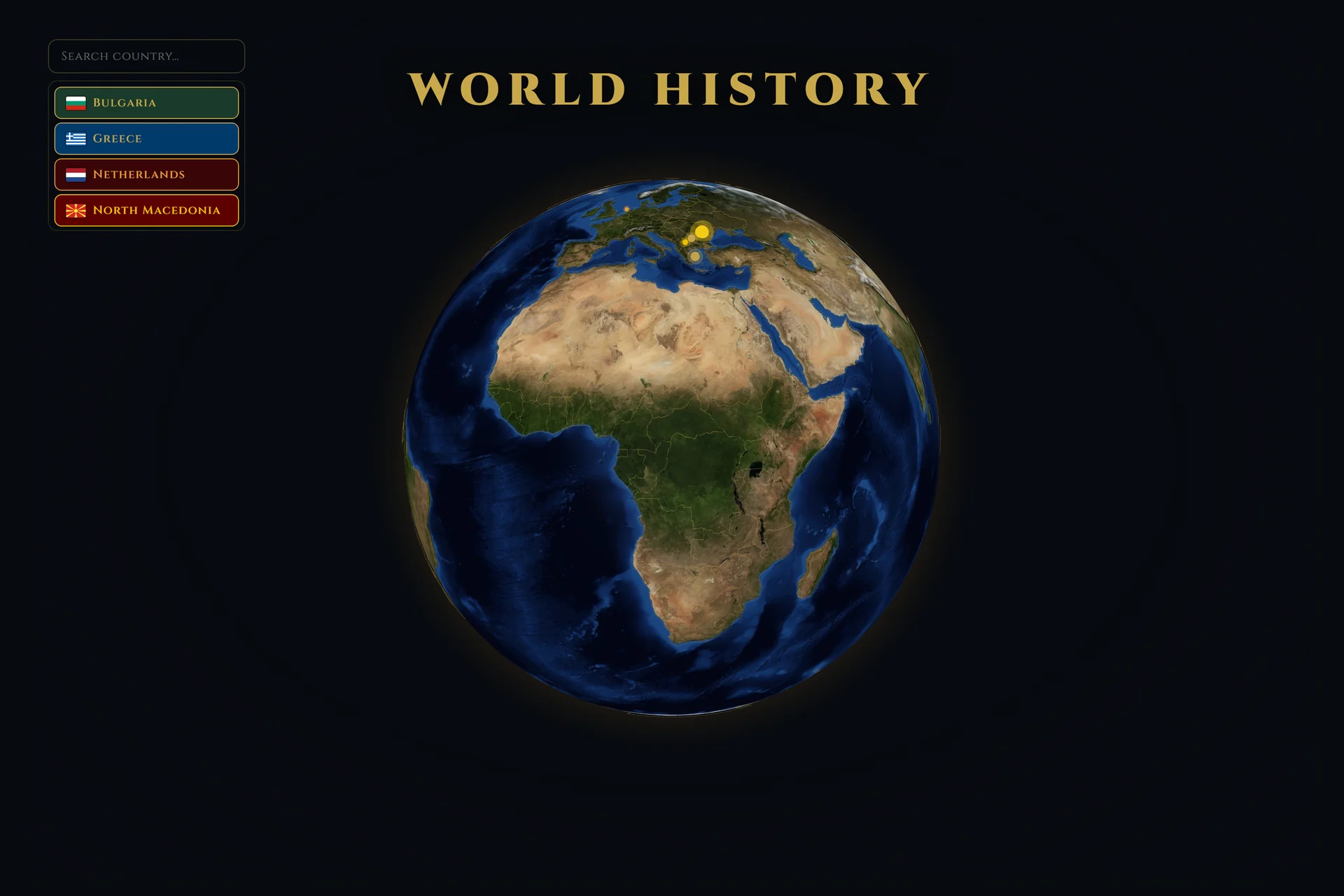
The front page is a three-dimensional Earth you can spin and zoom. Countries that have a page are marked on the surface: hovering a marker lights up that country and you can open it straight from there. There is a search box and a list down the side for anyone who would rather not go hunting.
Every country one button away
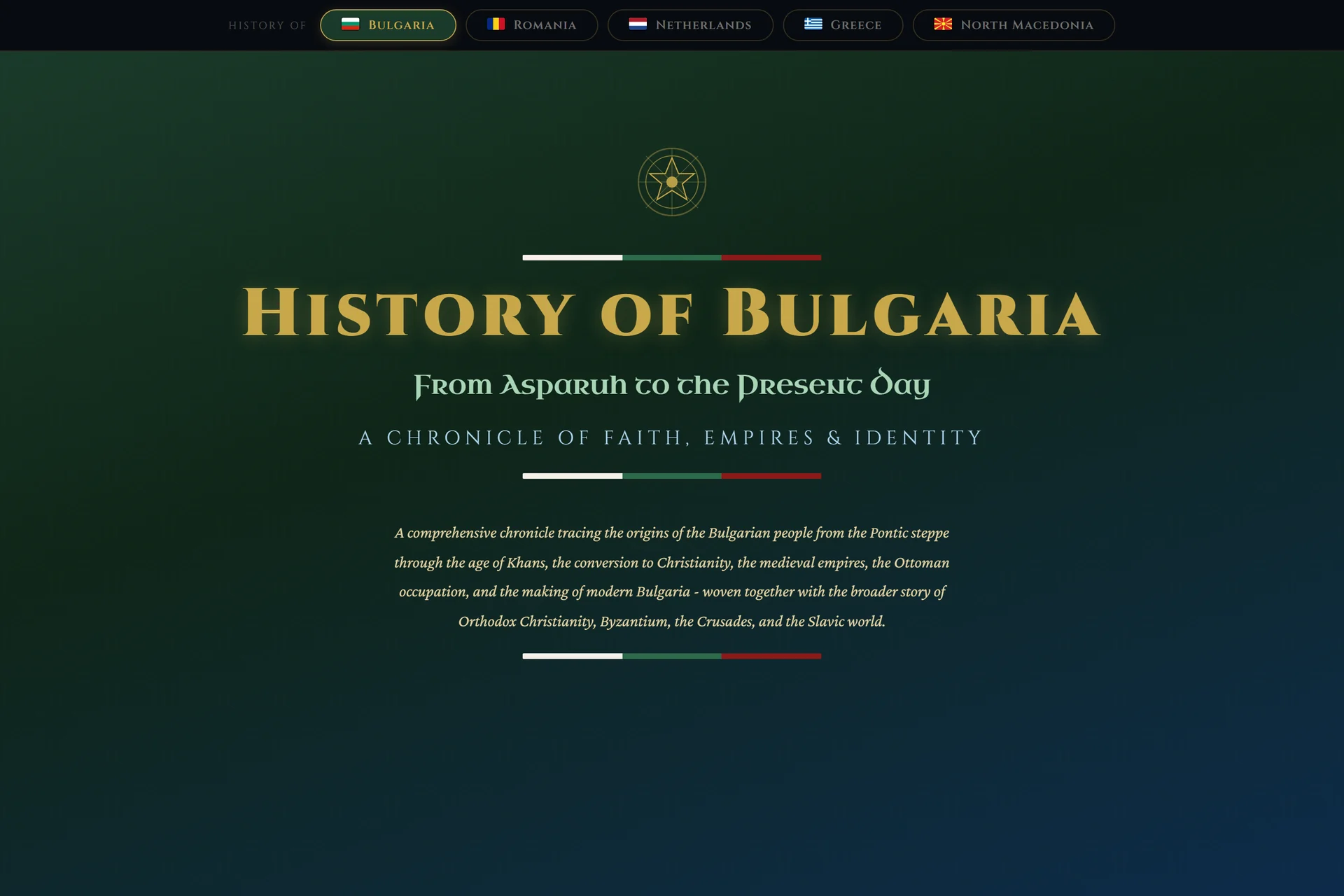
Opening a country does not drop you onto a loose page. A strip runs across the top carrying every country as a flag button with the current one lit, so you can go from Bulgaria to Greece without doubling back, and the label on the left takes you home to the globe.
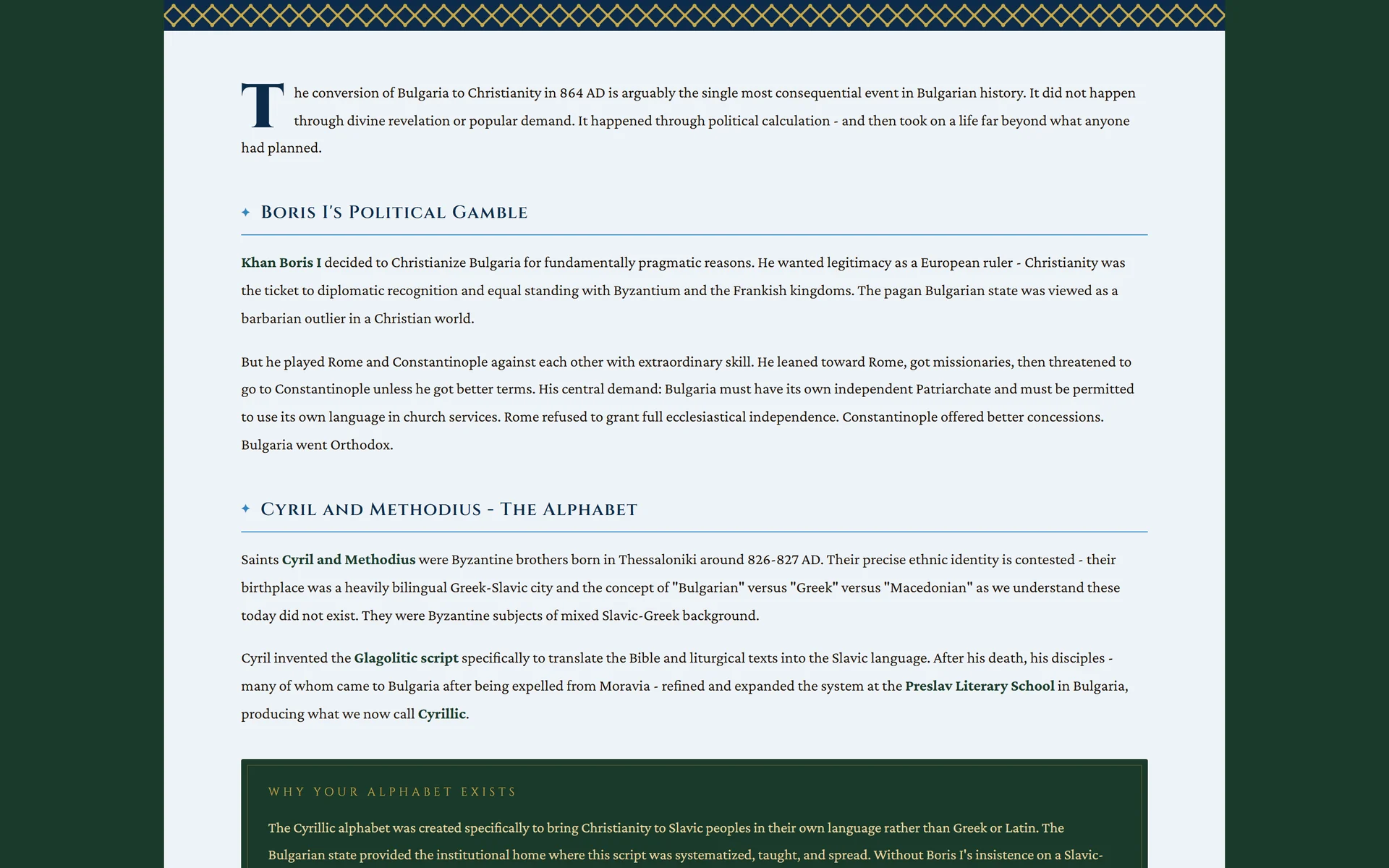
Each page runs to about fourteen chapters and the better part of ten thousand words, with its own contents list and a timeline running alongside.
Written from its own flag
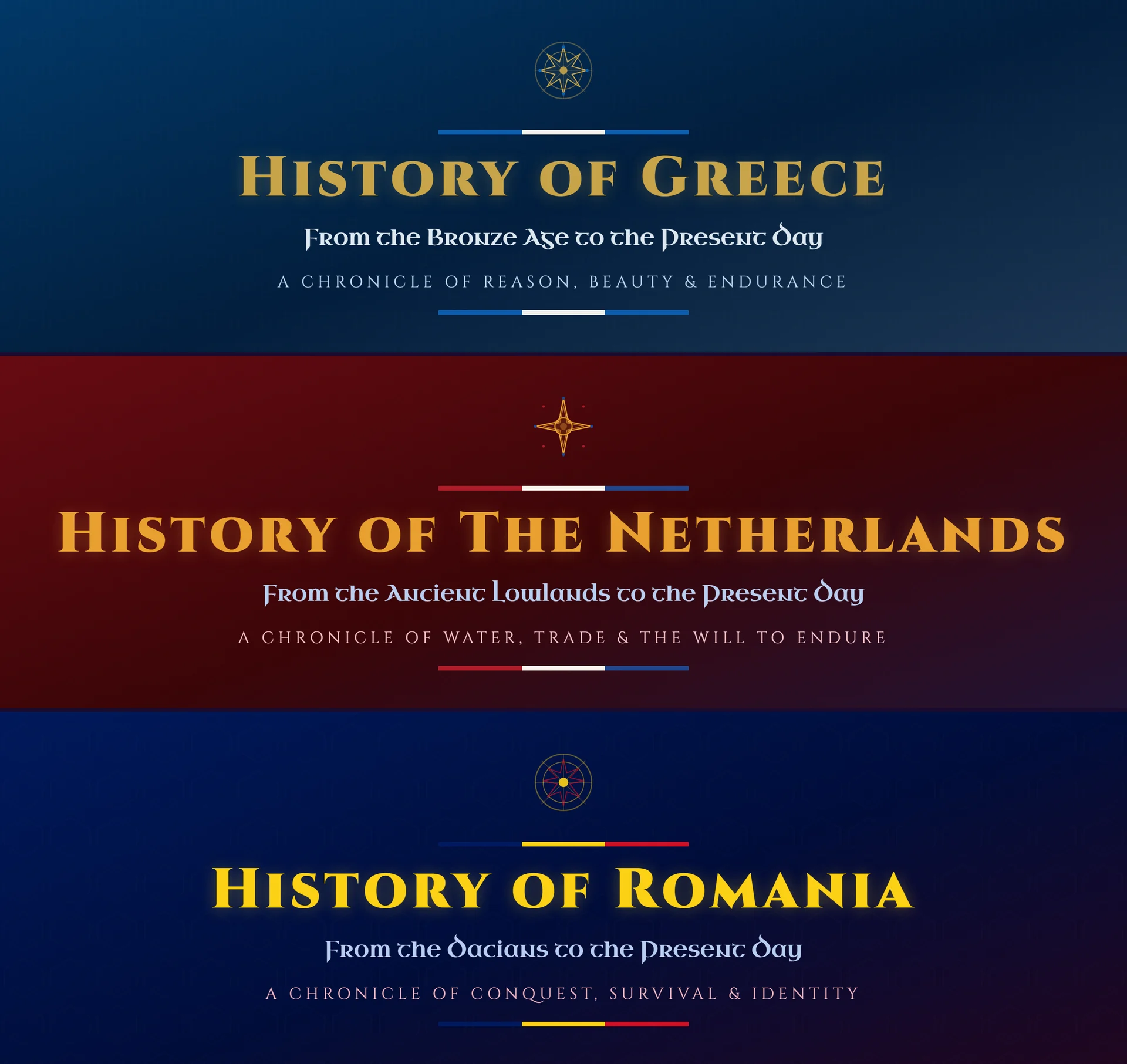
Every page takes its palette from that country's flag instead of reusing one house style. Greece runs blue and white, the Netherlands red over navy, Romania blue with gold. The lines under each title are the flag itself, the crest above it is drawn per country, and the line underneath names what that particular history is about: reason and endurance for one, water and trade for another, conquest and survival for a third.
The structure is identical across all of them, which is what lets the colour do the work. They read as siblings without any two looking alike.
Long enough to be worth it
It is written out in full paragraphs rather than bullet points, which is the whole point of the thing: the aim is to explain how something happened, not to list that it did.