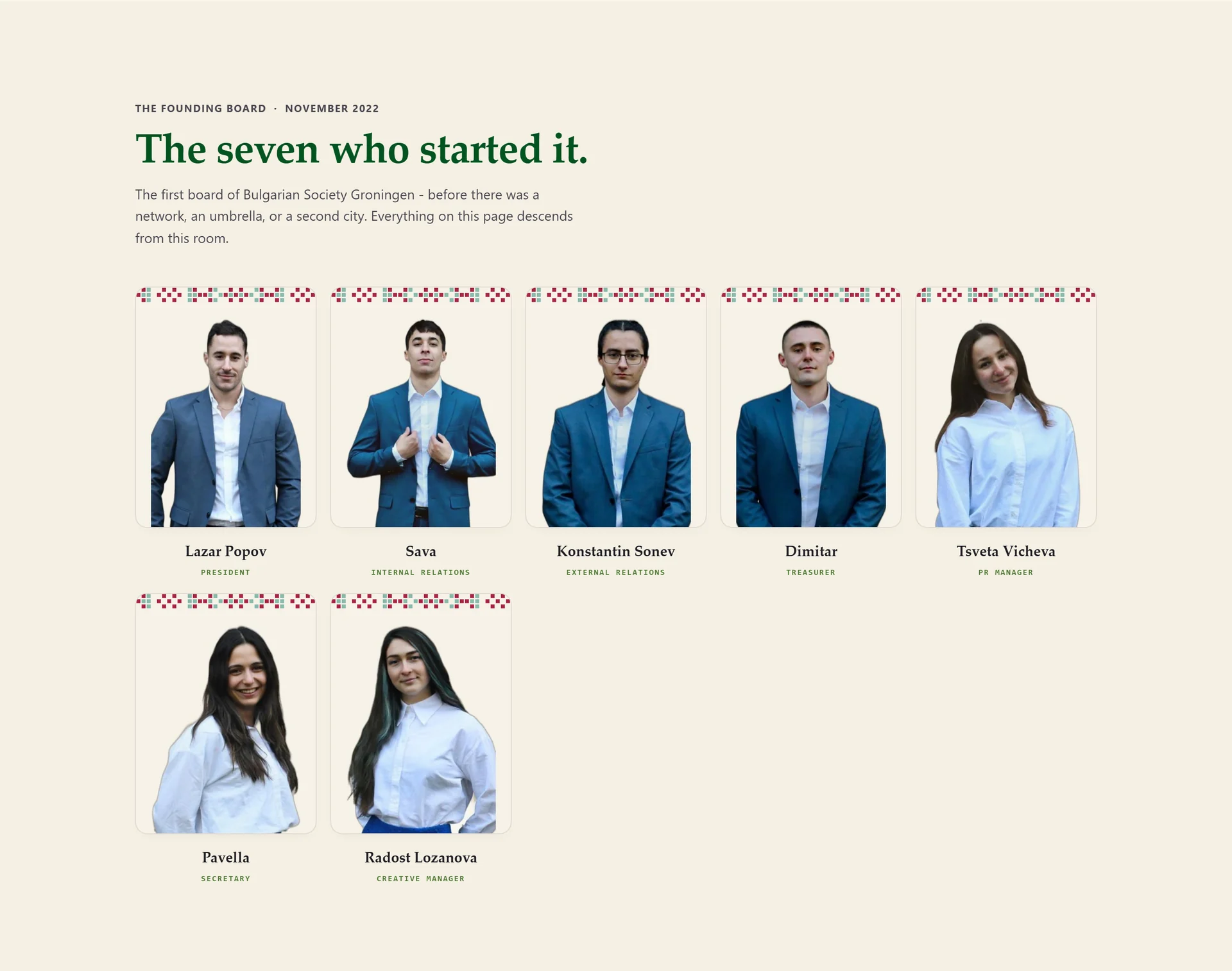
2026
Bulgarian Society Chronicle
An organisation whose board hands over every year loses its own history at a rate nobody inside a single mandate can feel. Four years in, the Bulgarian Society Netherlands had grown from one board in Groningen to a national network, and almost none of it was written down anywhere that outlived the people who were there.
The Chronicle is that record: every event, every board and every named seat, on one page anyone can search. It is still being added to.
Nine threads, four years
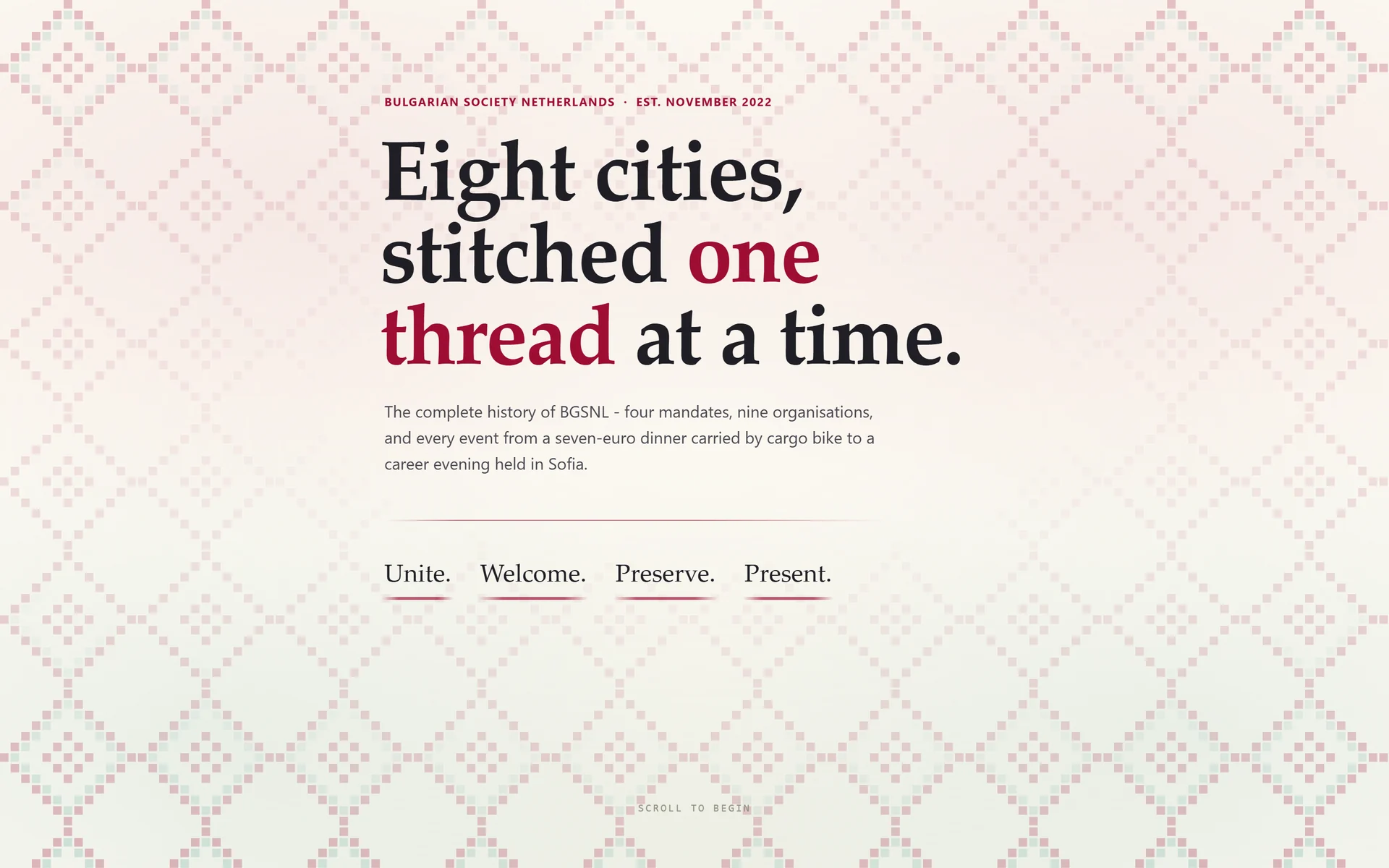
The centrepiece is a diagram rather than a list. Each branch is a vertical thread running down the page in its own colour, a diamond marks every event that branch ran, and a horizontal line joins two threads wherever branches did something together. A new thread simply begins partway down, on the date that branch was founded.
Hovering any marker gives a short brief of what that entry was, and clicking it jumps to the full record below. A Watch it grow button replays the four years from the founding, and the slider next to it drags to any month.
Everything on record
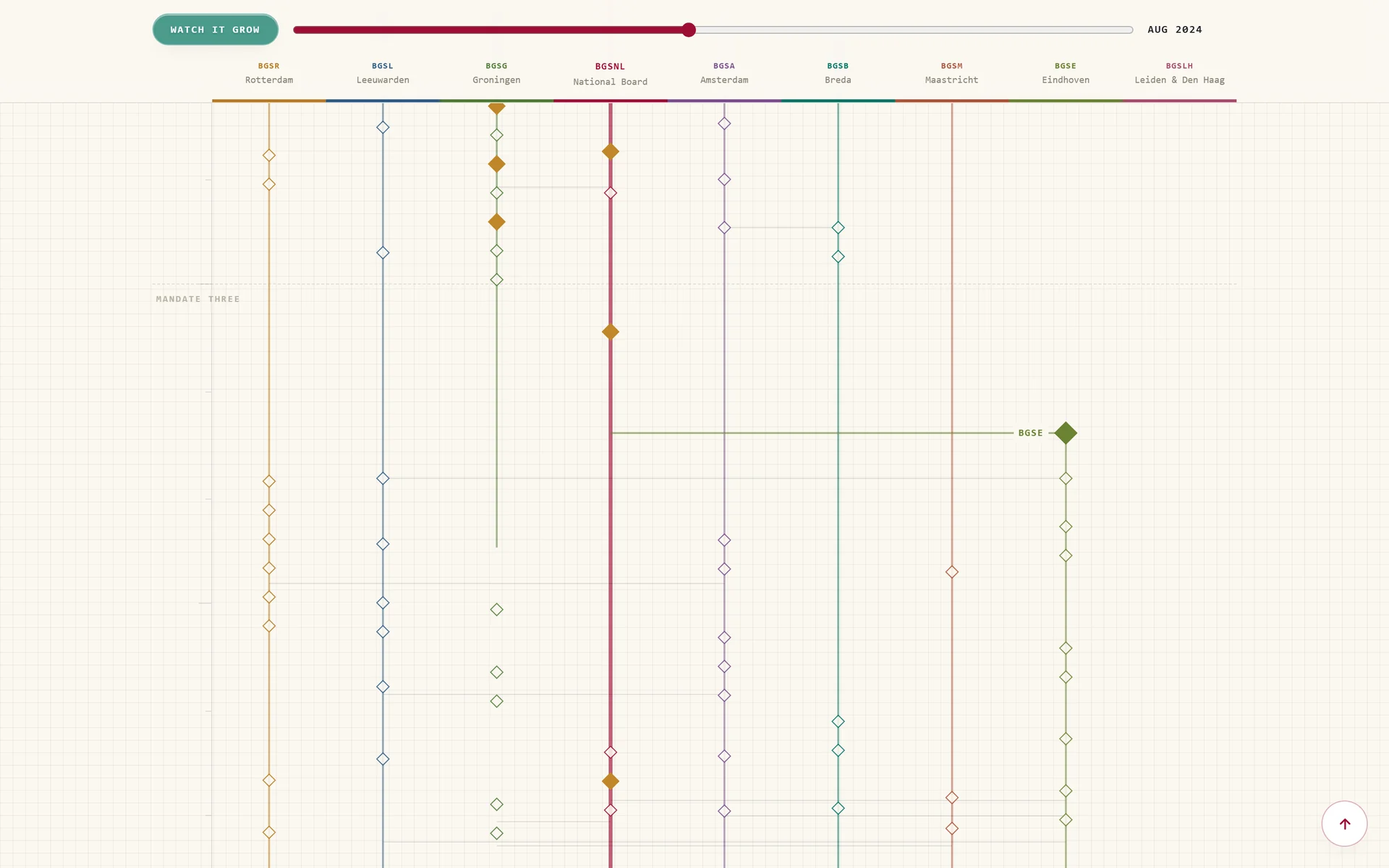
Below the diagram the same entries run as a dated list, filterable by branch and searchable, each card carrying the full version of the hover brief.
What four years built
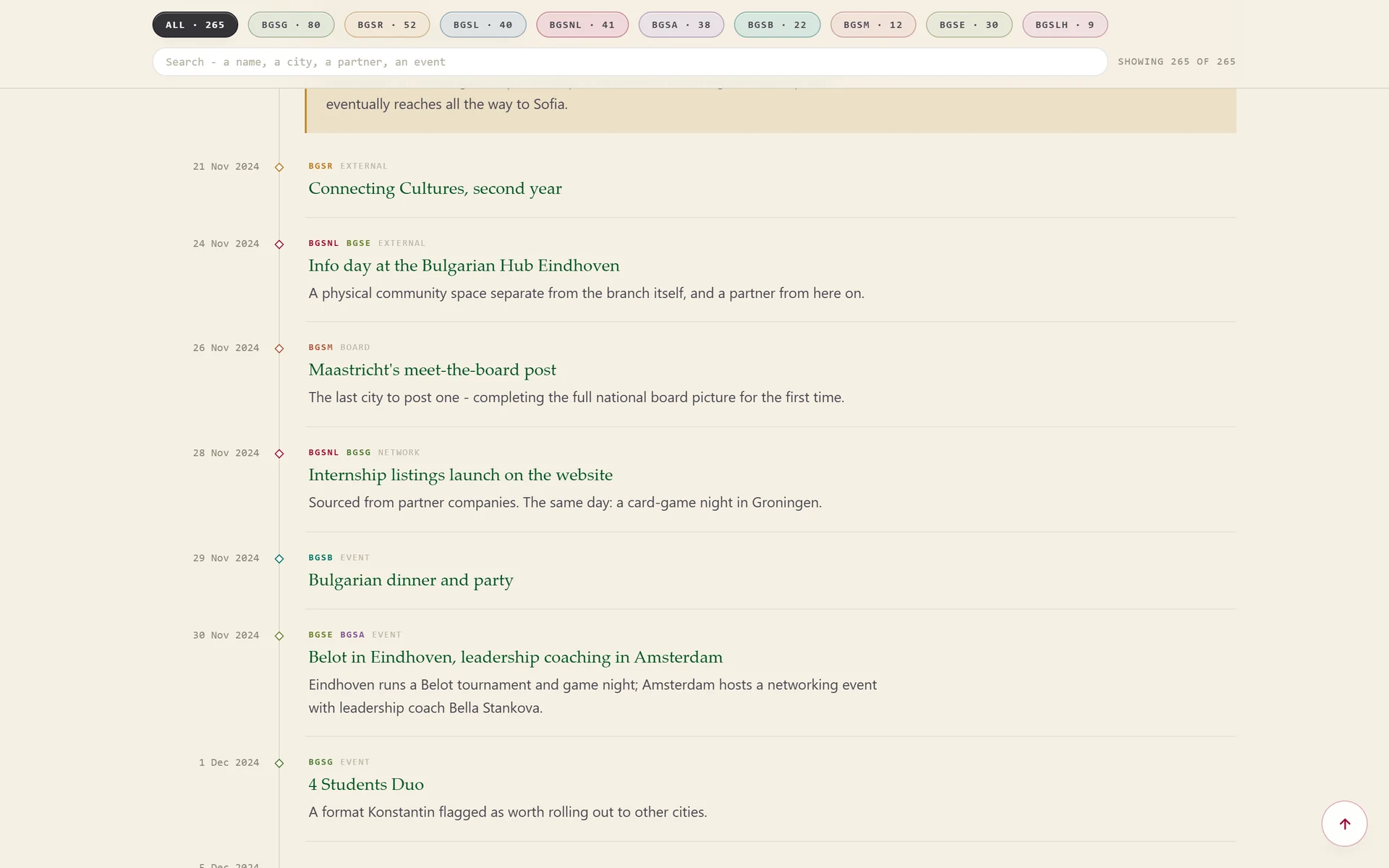
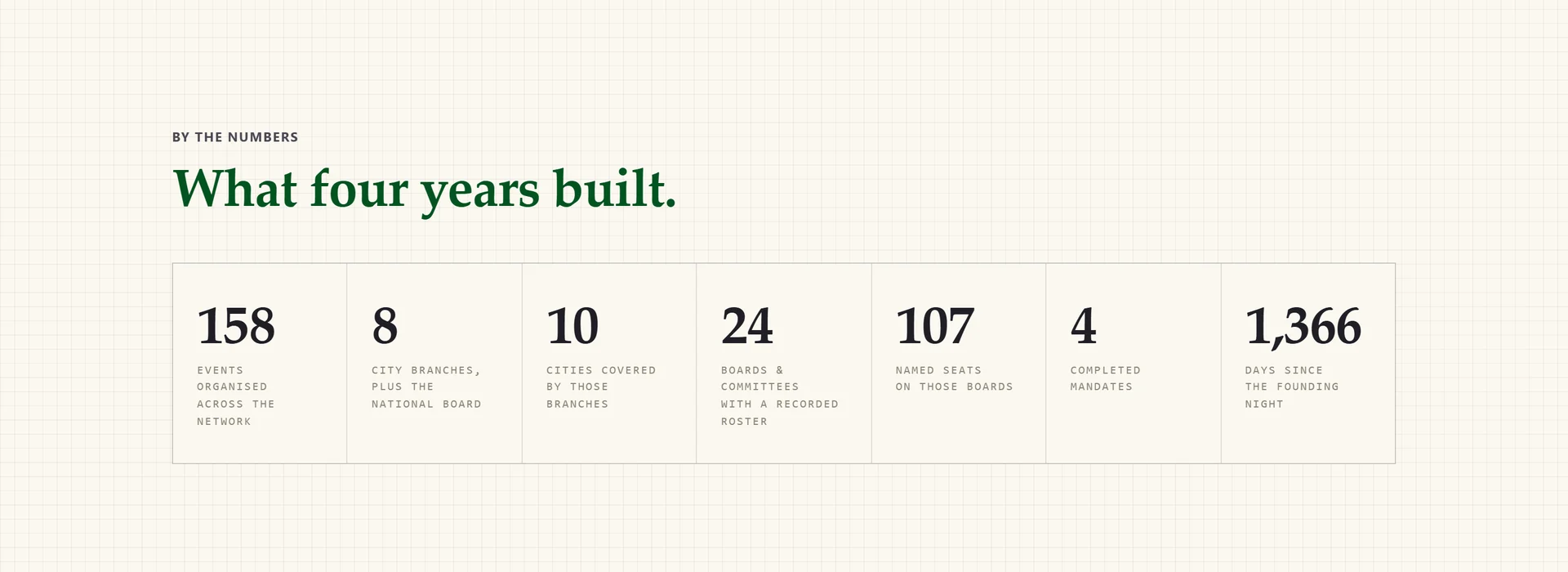
The page opens on the totals: events run, branches, cities reached, boards seated, and the people who have held a post. Spread across nine boards and four handovers, nobody had been able to add that up before.
Drawn in code
The ornament is shevitsa, Bulgarian folk embroidery. None of it is an image file: the bands are generated on canvas and the hero runs a WebGL shader.